Arabica and robusta in three versions – meet the new coffees from Bro Coffee Roastery
A thick, dark crema on your espresso, chocolatey depth and a distinct caffeine kick – robusta is often the one behind all of it. For years it was regarded as arabica's cheaper, lesser sister, added to coffee only to cut costs. Yet a well-selected, carefully roasted robusta can bring a great deal to the cup. And combined with arabica, it makes a fuller coffee than either species on its own.
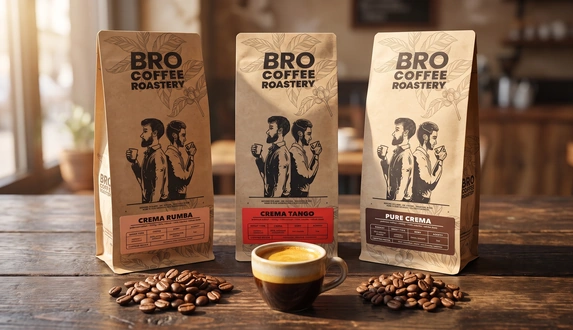
That is why, at our roastery, we decided to show robusta in three versions. Joining our range of coffee beans from Bro Coffee Roastery are Crema Rumba, Crema Tango and Pure Crema. The first two are blends of arabica from Brazil and robusta from Vietnam in 80/20 and 70/30 proportions, and the third is 100% robusta. They differ in the share of each species and, as a result, in flavour, intensity and body.
Before we introduce each of them, we will explain how arabica differs from robusta, what robusta tastes like and who it is for, and which coffee is more acidic and which is stronger. We will also explain why it is worth combining the two species and how the proportions change the character of the coffee in your cup.
Table of contents:
- Arabica and robusta – how do these two types of coffee differ?
- Robusta coffee – flavour and character
- Robusta or arabica – which coffee should you choose?
- Arabica and robusta blend – why combine both species?
- Bro Coffee Roastery Crema Rumba coffee beans – 80% arabica and 20% robusta
- Bro Coffee Roastery Crema Tango coffee beans – 70% arabica and 30% robusta
- Bro Coffee Roastery Pure Crema coffee beans – 100% robusta
- Three ratios, three coffee characters from Bro Coffee Roastery
Arabica and robusta – how do these two types of coffee differ?
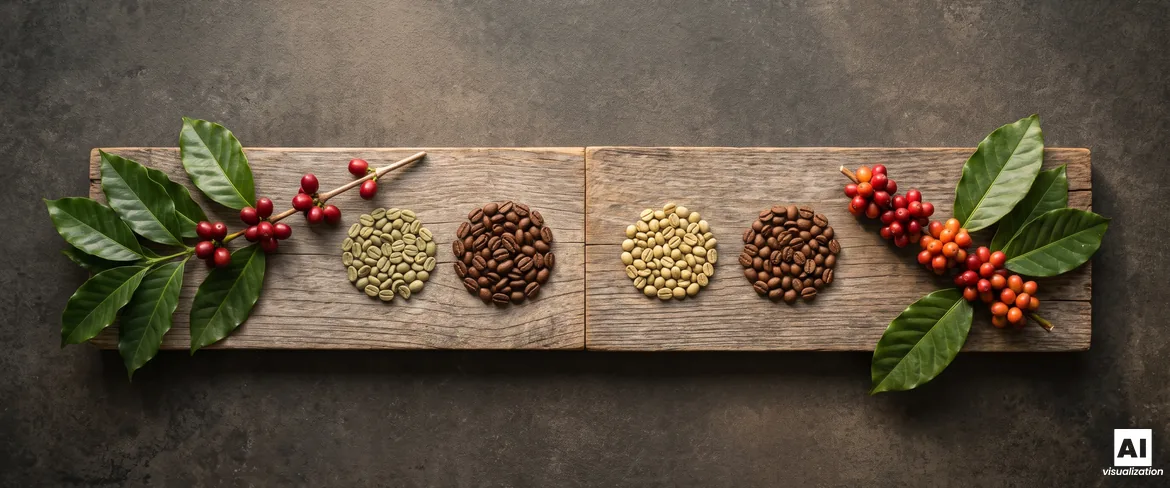
Almost all the coffee drunk around the world comes from two species: arabica (Coffea arabica) and robusta (Coffea canephora). On packaging you will often see arabica and robusta mentioned together, or the proportions of the two species. Arabica accounts for around 60% of world production and robusta for around 40%. Interestingly, arabica arose from a natural cross between the ancestors of robusta and another wild coffee species. Despite this kinship, the differences between arabica coffee and robusta coffee are clear – they begin on the plantation and end in the cup.
A comparison of robusta vs arabica beans is best started with where and how the plants grow. Arabica grows higher up, in a cooler climate, and is more demanding to cultivate. Robusta copes better with warmth and lower altitudes, and its plants are hardier. The composition of the beans differs too: arabica contains more sugars and its brew more oils, while robusta usually contains clearly more caffeine. That is exactly why the two species behave so differently during roasting and brewing. We described the history of both species and how they are grown in more detail in our article Arabica coffee vs robusta. What’s the difference?, while here we will focus on what you taste in the cup.
| Feature | Arabica | Robusta |
|---|---|---|
| Flavour | complex, sweet, delicate | intense, dry, with a distinct bitterness |
| Aroma | fruity, floral, chocolatey, nutty | cocoa, dark chocolate, roasted nuts |
| Caffeine | lower content | usually clearly higher content |
| Acidity | clearly noticeable, often fruity | low in taste, not very fruity |
| Body | light to medium, smooth | full to heavy |
| Crema on espresso | reddish-brown | darker, often longer-lasting |
The table shows the typical features of arabica beans vs robusta beans, but it is only a starting point. The flavour of coffee is also shaped by the origin of the beans, the processing method, the roast level and the brewing method. So it is not about which species is “better”, but about what each of them brings to the cup – and how you can make use of it.
Arabica – aroma, sweetness and subtlety in coffee
Arabica is the species most coffee lovers associate with high-quality coffee. It is prized above all for its complexity of aromas, natural sweetness and delicate, elegant profile. Depending on the country of origin and processing, in a cup of arabica you may taste fruit, flowers, milk chocolate, caramel or nuts. Its higher sugar content means that many compounds responsible for sweetness and a rich aroma are formed during roasting.
Acidity is also more noticeable in arabica, and with good beans it is pleasant and juicy – it brings to mind fruit rather than vinegar. It contains less caffeine than robusta, so a brew made from pure arabica can feel gentler. It is arabica that forms the foundation of speciality coffee. Single origin arabica from Brazil is also the base of our new blends, Crema Rumba and Crema Tango.
Robusta – intensity, caffeine and crema
Robusta has a completely different temperament. Its flavour is more intense and drier, with a distinct, noble bitterness in the style of dark chocolate. In the cup you will find notes of cocoa, roasted nuts and sometimes molasses too. It tastes less tart and bright than arabica, so it is rarely associated with fruity freshness – but it gives a sense of depth and substance.
The most frequently mentioned advantage of robusta, however, is crema. Robusta often helps to produce a darker, longer-lasting foam on espresso, although the research is not clear-cut here – bean freshness and roast level matter more than the species alone. Robusta also usually contains clearly more caffeine than arabica: the literature gives approx. 0.9-1.3% of the dry matter of the green bean for arabica and approx. 1.5-3.3% for robusta. On top of that, it gives coffee a fuller body, that is, the impression of density and “weight” of the brew in the mouth. This means that even a small addition of it noticeably changes the character of an espresso – more on that in the following sections.
Robusta coffee – flavour and character
Robusta coffee was for a long time used mainly in instant coffees and cheap blends, hence its rather poor reputation. In fact, robusta, like arabica, can vary enormously in quality. What you find in the cup is determined by careful selection of the beans, their processing and their roast. A well-selected robusta is not a “filler” but a fully fledged coffee in its own right for people who want power, depth and a thick texture.
Robusta has its firm place above all in espresso, where it provides substance, crema and an expressive finish. It also works well where coffee has to cut through milk – in a cappuccino, latte or flat white.
💡 Fun fact: The world's largest producer of robusta is Vietnam. According to data from the United States Department of Agriculture (USDA), Vietnam accounts for more than a third of world robusta production. It is precisely from there that the robusta in our new coffees comes.
What does robusta taste like?
The first thing you notice is the intensity. The flavour of robusta is dry and assertive, with a distinct bitterness that in well-roasted beans is reminiscent of dark chocolate rather than burnt notes. The typical sensory profile of robusta includes:
- ✔️ notes of dark chocolate and cocoa, roasted nuts and sometimes molasses too,
- ✔️ low perceived acidity – the brew is not very fruity and not very “bright”,
- ✔️ full or heavy body – the coffee feels thick and substantial,
- ✔️ a long finish – the flavour stays in the mouth for longer.
This is, of course, a general picture. The flavour of robusta depends on the quality of the beans, the growing region and the way it is roasted. A roast that is too dark easily turns its noble bitterness harsh and ashy, which is why we roast our robustas to a medium / omniroast level – to bring out the chocolate-and-cocoa character without any burnt notes. As a result, in the cup you taste chocolatey depth rather than the bitterness of burnt beans.
Robusta coffee beans – who are they for?
Robusta coffee beans are ideal above all for those who want character in coffee rather than subtle, fruity nuances. You will especially like them if:
- 👉 you mostly drink espresso and like it thick, intense and with a distinct crema,
- 👉 you prefer chocolate and cocoa flavours to fruity ones, and tartness in coffee is not for you,
- 👉 you make milk-based coffees and want your coffee not to get lost in the milk,
- 👉 you brew coffee in a moka pot or an espresso machine and expect a substantial brew,
- 👉 you like a stronger caffeine start to the day.
Robusta beans work best with pressure-based brewing methods. In a portafilter or bean-to-cup espresso machine they give a thick espresso with a lasting foam, and in a moka pot a strong, substantial brew that goes brilliantly with milk. If you are only just starting out with the moka pot, take a look at our guide How to make coffee in a moka pot? You can also brew robusta in a French press or as a pour-over, but then its intensity and bitterness are more exposed. For many people, 100% robusta coffee becomes their everyday espresso, and for others a great addition to arabica, as we will see in a moment.
Robusta or arabica – which coffee should you choose?
Robusta or arabica – there is no single right answer to this question, because everything depends on what you are looking for in the cup. Instead of asking which coffee is better, it is worth asking which suits your taste, your brewing method and the time of day better. A few simple questions will help you decide:
- ✔️ How intense do you like your coffee? If mild and aromatic – go for arabica. If strong and substantial – reach for robusta or a blend containing it.
- ✔️ How do you feel about acidity? Fruity, juicy acidity is the domain of arabica. If you prefer a chocolatey, dry profile, robusta will suit you better.
- ✔️ How much caffeine do you need? Robusta usually contains clearly more of it, so it will give you a stronger caffeine start.
- ✔️ How do you brew your coffee? Arabica does better in pour-over methods, while in an espresso machine and a moka pot both arabica and robusta work well.
- ✔️ What drink are you making? For black filter coffee choose arabica; for a cappuccino or latte it is worth considering a blend with robusta.
The arabica or robusta dilemma does not have to end with choosing one side. For many coffee lovers the best solution is a blend in which the two species complement each other. In the following sub-sections we will look at the two questions people ask most often: acidity and the strength of coffee.
Which coffee is more acidic: arabica or robusta?
As for which coffee is more acidic – arabica or robusta, in the cup the answer is usually arabica. It is in arabica that acidity is more noticeable, often with a fruity character – citrus, red fruit or apple. Robusta tastes less tart and more chocolatey, with a dominant bitterness and a dry finish.
What is interesting, however, is that perceived acidity is not the same as the amount of acids in the bean. Chemical analyses show that roasted robusta contains two to five times more organic acids than arabica. Even so, it tastes less tart – the perception of acidity is also affected by the bitterness and body of the brew. Origin, roast level and brewing method matter as well – a lighter roast usually emphasises tart notes, while a darker one tones them down. You can read more about how to choose coffee in terms of acidity and bitterness in the article Coffee acidity and bitterness – how to choose the perfect beans for your taste
Is robusta stronger than arabica?
When we talk about “strong” coffee, we often mean two different things: caffeine content and flavour intensity. In both cases robusta usually wins. It has more caffeine and, on top of that, a more assertive, slightly bitter profile and a fuller body, so it seems stronger from the very first sip.
How much caffeine ends up in your cup, however, is determined by more than the species. The proportions in the blend, the amount of ground coffee, the contact time with water and the brewing method all count too. A large mug of pour-over made from 100% arabica can therefore deliver more caffeine than a single espresso with robusta. If you would like to find out how much caffeine different drinks contain, take a look at the article How much caffeine is in coffee?
⚠️ Remember: Coffee with a high share of robusta usually provides more caffeine, so it is worth drinking in moderation. According to the European Food Safety Authority (EFSA), for healthy adults, caffeine intake of up to 400 mg a day, from all sources, does not raise safety concerns. During pregnancy and breastfeeding this level is 200 mg a day.
Caffeine and acidity, however, are only part of the picture. The most interesting things happen when both species end up in one cup – and that is exactly what we will look at in the next section.
Arabica and robusta blend – why combine both species?
An arabica and robusta blend is a way to make a coffee in which the strengths of both species complement each other. Arabica brings sweetness, aroma and complexity of flavour, while robusta brings intensity, full body, a more pronounced crema and more caffeine. On their own, each has its limitations: pure arabica can be too delicate in espresso for some people, and pure robusta too dry for some. Together they make a fuller, better-balanced brew.
Many classic Italian espressos have been built on this combination for decades. Such a blend gives baristas more control over how the coffee behaves in the machine: how thick the foam will be, how the drink will cope with milk and how long the flavour will linger in the mouth. In research on espresso crema, a blend with added robusta has in some cases even been found to foam better than pure arabica – although, as we mentioned, bean freshness and roast level also have a big influence on the foam.
The question is often asked whether a blend is simply coffee “diluted” with a cheaper ingredient. It is not – when the robusta is of good quality and the proportions are chosen deliberately, the two species support each other. If you would like to learn more about how coffee from a single source differs from a blend, read our article Single origin or blend coffee? Let us help you choose.
🔍 Worth knowing: The species affects not only the flavour but also the look of an espresso. The foam from pure arabica is usually reddish-brown, while that from robusta is darker, brown with a greyish tint. In a blend the two shades combine, which is why the crema of a blend with robusta is generally darker and richer in colour.
How do proportions affect the flavour of coffee?
In every blend of arabica and robusta, the proportions matter most. The more robusta, the more intense the coffee becomes, with more chocolate and cocoa, fuller body and more caffeine. The more arabica, the gentler, sweeter and more aromatic it is. This is clearly visible in the three proportions we chose for our new coffees:
- 👉 80% arabica and 20% robusta – a mild, balanced everyday profile. The sweetness of arabica leads, while robusta adds creaminess and a thicker crema without dominating the flavour. This 80% arabica, 20% robusta coffee is a good choice for the start of your robusta journey.
- 👉 70% arabica and 30% robusta – a distinctly more intense character. The share of cocoa and dark chocolate grows, the body becomes full and the crema more abundant. 70% arabica, 30% robusta coffee is a classic for lovers of strong, Italian-style espresso.
- 👉 100% robusta – the boldest version, in which robusta shows its full character: heavy body, dark chocolate, cocoa and a thick, full crema.
A difference of 10 percentage points may seem small, but in espresso it can be clearly noticeable. Every arabica and robusta blend is therefore a separate flavour profile, not just “slightly stronger arabica”. If you would like to recognise flavour notes better and describe what you taste in the cup, take a look at our guide The flavours of coffee – a guide to flavour notes and sensory profiles. Now let us take a closer look at each of our three new coffees.
Bro Coffee Roastery Crema Rumba coffee beans – 80% arabica and 20% robusta
Crema Rumba is the mildest of our new coffees and a coffee for everyday espresso. These 80% arabica, 20% robusta coffee beans combine single origin arabica from Brazil, rated 83-84 points on the SCA scale, with robusta from Vietnam of the Fine Robusta Grade 1 class. Arabica is responsible here for the sweetness and nutty aroma, while a small, precisely chosen share of robusta adds a thicker crema and a creamier body.
We roast the blend to a medium / omniroast level. In the cup you clearly taste hazelnut and milk chocolate, with a delicate cocoa note at the finish. The acidity is low, the body medium to full and the crema thick, full and aromatic. It is a balanced profile that you will not tire of, even by the third cup. As in a rumba – the sweetness of arabica gives the coffee its melody, and robusta adds a springy rhythm.
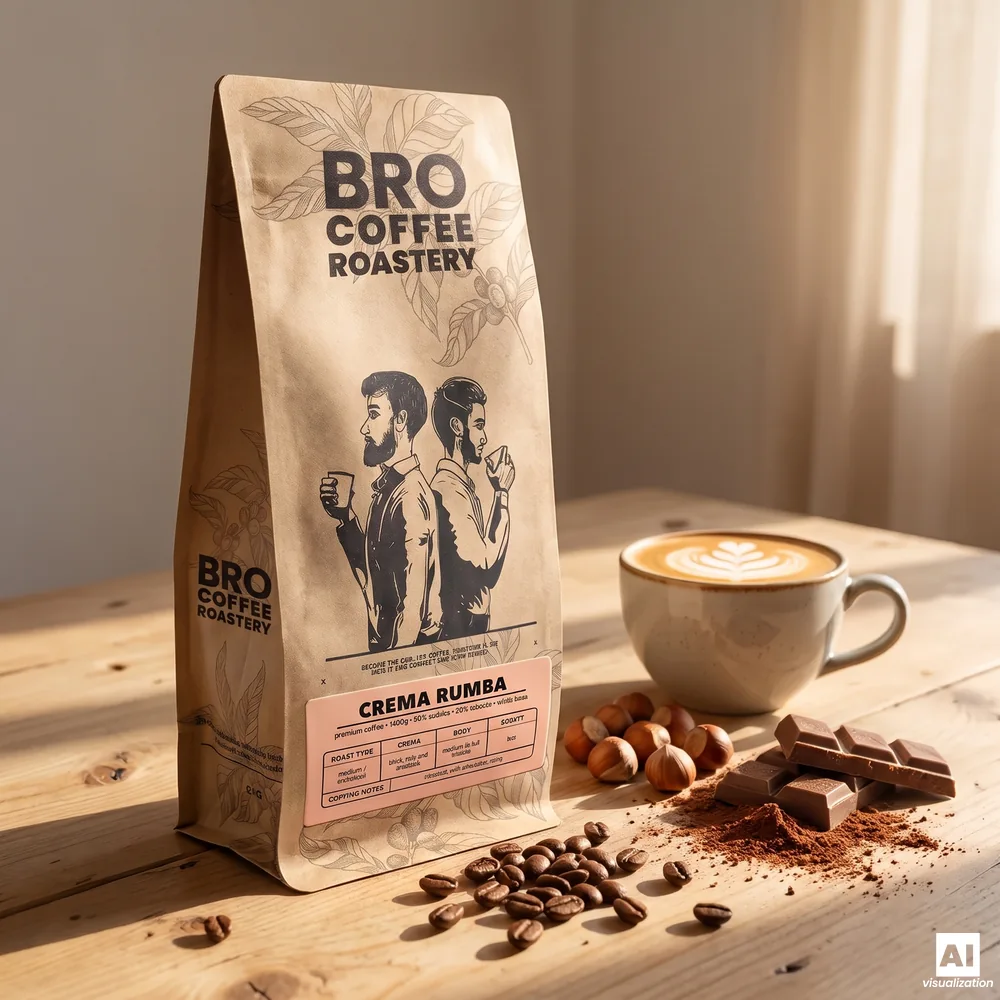
☕ Bro Coffee Roastery Crema Rumba – at a glance
Crema Rumba is a mild blend of arabica and robusta for those who are looking for a sweet, dessert-like espresso with a thick crema but without intense bitterness.
- ✔️ Composition: 80% arabica from Brazil (83-84 SCA points), 20% robusta from Vietnam (Fine Robusta Grade 1).
- ✔️ Profile: hazelnut, milk chocolate, cocoa; medium / omniroast level, low acidity, medium to full, creamy body.
- ✔️ Brewing: best in a bean-to-cup or portafilter espresso machine and in a moka pot; it also works in a French press, an AeroPress and as a pour-over.
Crema Rumba is particularly at home in milk-based coffees. In a latte, flat white or cappuccino, its nutty-chocolatey notes blend with the milk into a harmonious, dessert-like whole. It is also a good choice if you usually drink 100% arabica coffees and want to see what robusta brings to a blend – without a revolution in flavour.
Bro Coffee Roastery Crema Tango coffee beans – 70% arabica and 30% robusta
Crema Tango is a step towards intensity. We composed it with espresso of a confident, expressive character in mind. This arabica and robusta blend combines 70% single origin arabica from Brazil (83-84 SCA points) with 30% robusta from Vietnam of the Fine Robusta Grade 1 class. The share of robusta is high enough here to give the coffee substance and power, while the arabica makes sure the whole remains round and sweet.
We roast the beans to a medium / omniroast level. In the cup, cocoa, dark chocolate and roasted nuts dominate. The acidity is low, the body full and creamy, and the crema thick, abundant and aromatic. It is a profile well known to lovers of classic Italian-style espresso. As in a tango – arabica sets the melody, and robusta gives it strength and tempo.
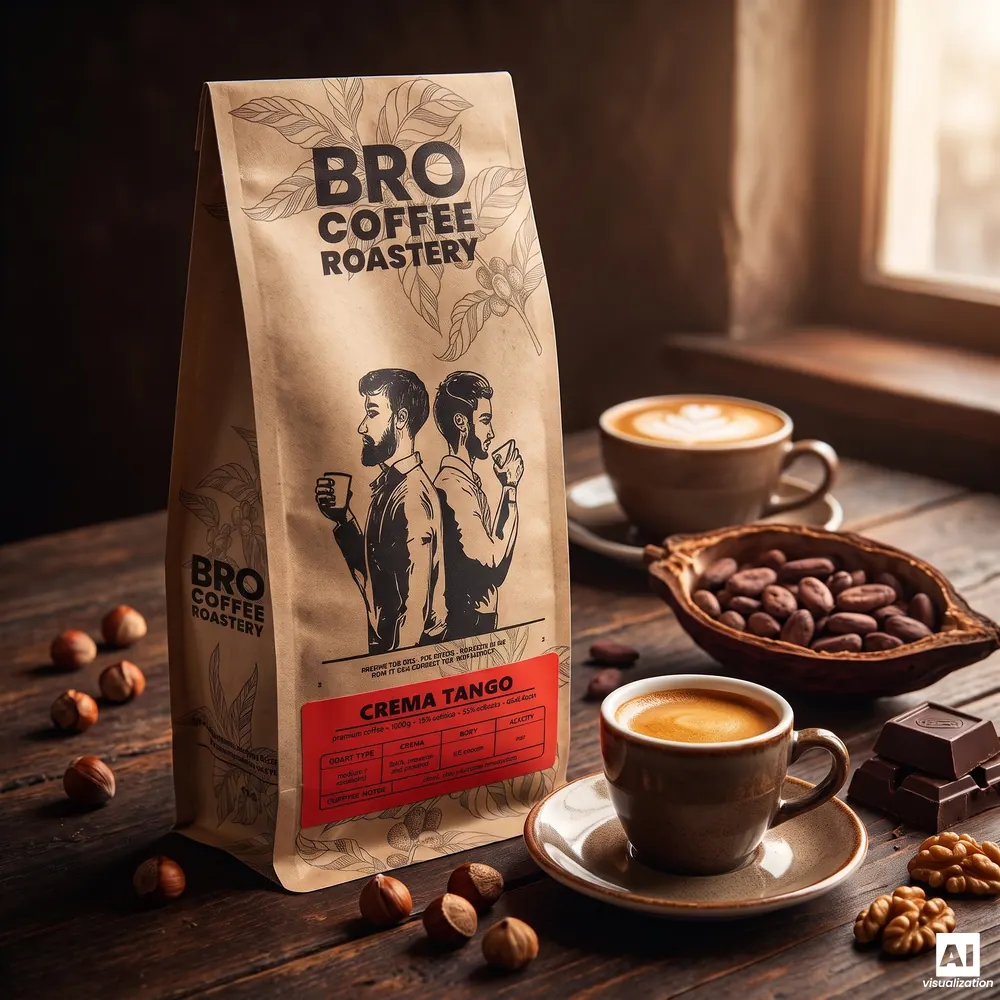
☕ Bro Coffee Roastery Crema Tango – at a glance
Crema Tango is a blend for those who appreciate an abundant, lasting crema, full body and a cocoa-and-chocolate flavour without noticeable acidity.
- ✔️ Composition: 70% arabica from Brazil (83-84 SCA points), 30% robusta from Vietnam (Fine Robusta Grade 1).
- ✔️ Profile: cocoa, dark chocolate, roasted nuts; medium / omniroast level, low acidity, full, creamy body.
- ✔️ Brewing: best in a portafilter or bean-to-cup espresso machine and in a moka pot; it also works in a French press, an AeroPress and as a pour-over.
Crema Tango copes brilliantly with milk-based drinks – in a cappuccino, latte or flat white its cocoa character stays clear even with a lot of milk. It is also a good choice for the moka pot if you want a really substantial brew, and for those who like their cup to give a solid caffeine start.
Bro Coffee Roastery Pure Crema coffee beans – 100% robusta
Pure Crema is our answer to the question of how a well-selected, carefully roasted robusta tastes on its own, without the support of arabica. This 100% robusta coffee is made exclusively from beans from Vietnam, belonging to the Fine Robusta Grade 1 class. It is the boldest of our new coffees and at the same time the best way to get to know the pure character of this species.
We also roast Pure Crema to a medium / omniroast level. This is a deliberate choice: such a roast develops the chocolate-and-cocoa character of robusta without masking its flavour with burnt notes. In the cup you get dark chocolate, cocoa, roasted nuts and the deep sweetness of molasses. The acidity is low, the body heavy, creamy and smooth, and the crema thick, full and aromatic.
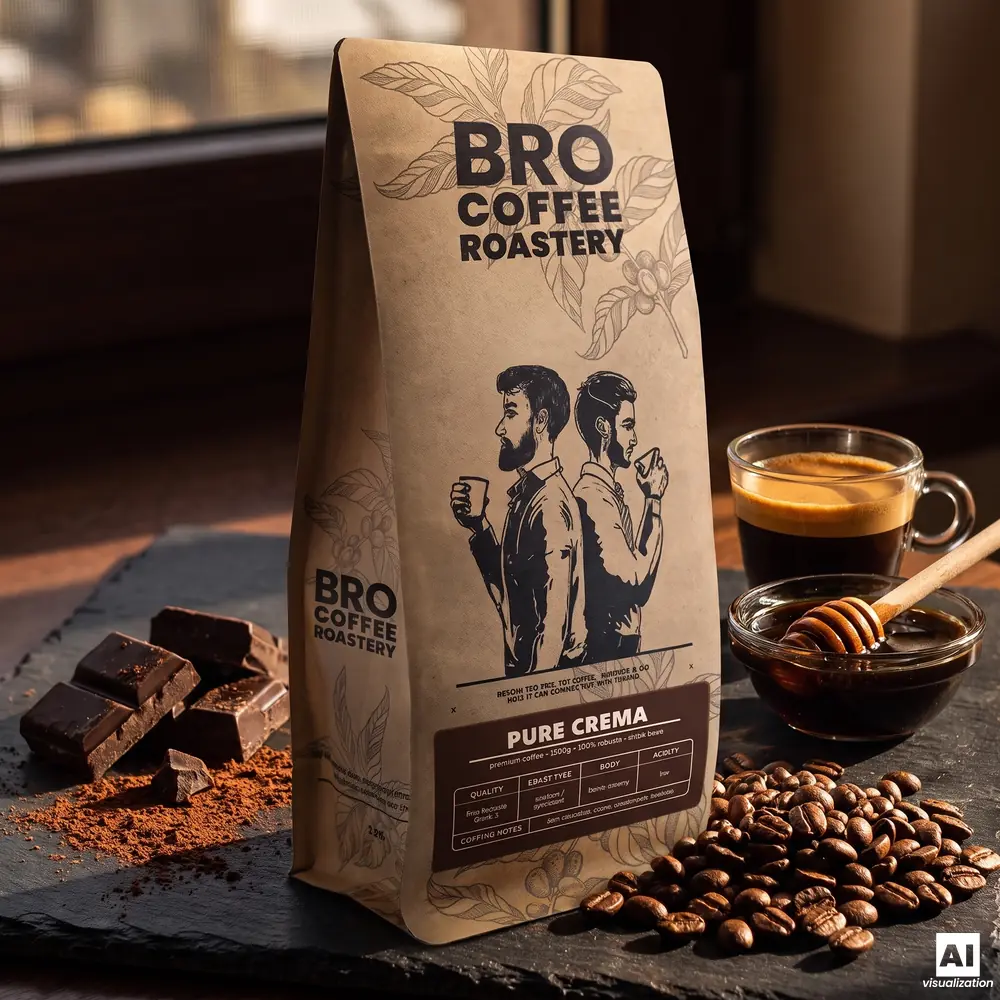
☕ Bro Coffee Roastery Pure Crema – at a glance
Pure Crema is made of robusta coffee beans for those who want character in the cup: a thick crema, chocolatey depth and power.
- ✔️ Composition: 100% robusta from Vietnam (Fine Robusta Grade 1).
- ✔️ Profile: dark chocolate, cocoa, roasted nuts, molasses; medium / omniroast level, low acidity, heavy, creamy body.
- ✔️ Brewing: above all espresso from a portafilter or bean-to-cup machine, and a moka pot; you can also brew it in a French press, an AeroPress and as a pour-over.
Pure Crema shows its full potential in espresso, but it also does well in a cappuccino and flat white – its chocolatey-molasses profile gives milk-based drinks depth. Just remember to enjoy it in moderation – Pure Crema contains more caffeine than arabica-dominant coffees.
Three ratios, three coffee characters from Bro Coffee Roastery
Crema Rumba, Crema Tango and Pure Crema are three steps on the scale of intensity – from a mild, dessert-like blend to the pure power of robusta. We roast them all to a medium / omniroast level, they all have low acidity and a thick crema, but each puts the emphasis in a different place. The table below will help you quickly weigh up the three versions in which we combine arabica and robusta:
| Coffee | Composition | Flavour notes | Body | Character |
|---|---|---|---|---|
| Crema Rumba | 80% arabica, 20% robusta | hazelnut, milk chocolate, cocoa | medium to full, creamy | mildest, balanced, for every day |
| Crema Tango | 70% arabica, 30% robusta | cocoa, dark chocolate, roasted nuts | full, creamy | intense, Italian-style espresso |
| Pure Crema | 100% robusta | dark chocolate, cocoa, roasted nuts, molasses | heavy, creamy | boldest, the pure character of robusta |
If you are only just getting to know robusta, start with Crema Rumba – it will show you what even a small addition of this species brings to an espresso. When you are looking for a stronger, more cocoa-rich profile, reach for Crema Tango. And if you want to get to know robusta without compromise, choose Pure Crema. Each of these coffees is at its best in espresso and milk-based coffees, and tastes best at least 7 days after roasting, once the beans have degassed naturally.
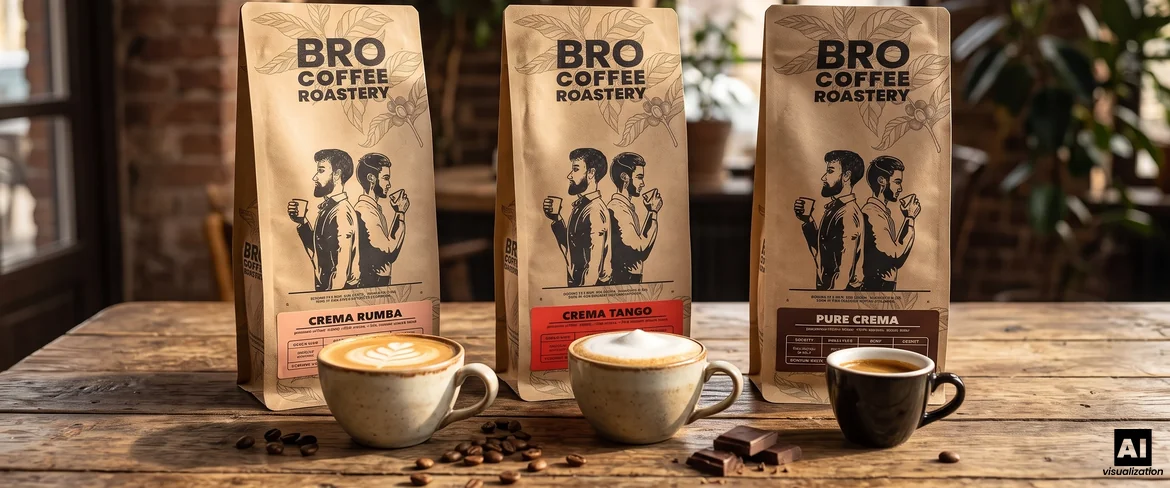
Arabica, robusta or a blend of both species – choose the proportions that best suit your taste.
FAQ – frequently asked questions about robusta, arabica and their blends
1. Robusta or arabica – which coffee should you choose?
It depends on your preferences. Arabica will suit you better if you like a mild, aromatic coffee with a noticeable fruity acidity, brewed, for example, as a pour-over. Robusta is the better choice when you are looking for an intense, chocolatey espresso with a thick crema and a bigger dose of caffeine. If you cannot decide whether robusta or arabica coffee is for you, reach for a blend of both species – for example 80/20 or 70/30.
2. What is the difference between robusta and arabica coffee?
Arabica has a more complex, sweeter and more delicate flavour, with notes of fruit, flowers, chocolate or nuts. Robusta is more intense and drier, with a distinct bitterness and notes of cocoa and dark chocolate. It also usually contains clearly more caffeine, has a fuller body and often helps to produce a longer-lasting crema on espresso.
3. Which coffee is more acidic: arabica or robusta?
In taste, arabica is usually the more acidic – its acidity can be fruity and juicy. Robusta seems less tart because bitterness and chocolatey notes dominate in it, although chemically it contains more organic acids. The perceived acidity is also affected by the origin of the beans, the roast level and the brewing method.
4. What does robusta coffee taste like?
Robusta coffee has an intense, dry flavour with a distinct, noble bitterness. Notes of dark chocolate, cocoa and roasted nuts are typical, and sometimes molasses too. It has low perceived acidity, full or heavy body and a long finish. Its flavour depends on the quality of the beans and the roast – a roast that is too dark easily gives it burnt notes.
5. Does robusta have more caffeine than arabica?
Yes, robusta usually contains clearly more caffeine. According to data from the literature, caffeine makes up approx. 0.9-1.3% of the dry matter of the green bean in arabica and approx. 1.5-3.3% in robusta. The amount of caffeine in a cup, however, also depends on the amount of coffee and the brewing method. According to EFSA, healthy adults can consume up to 400 mg of caffeine a day from all sources, and pregnant and breastfeeding women up to 200 mg.
6. Why combine arabica and robusta?
Because the two species complement each other. Arabica brings sweetness, aroma and complexity, while robusta brings intensity, full body, a more pronounced crema and more caffeine. As a result, a blend of the two species gives a more complete coffee than either on its own. The proportions determine the character of the coffee: the more robusta, the stronger and more chocolatey the brew.
Sources of information:
- USDA Foreign Agricultural Service, Coffee: World Markets and Trade, 2026.
- J. Salojärvi et al., The genome and population genomics of allopolyploid Coffea arabica reveal the diversification history of modern coffee cultivars, Nature Genetics, 2024.
- S. Yeager et al., Acids in coffee: A review of sensory measurements and meta-analysis of chemical composition, Critical Reviews in Food Science and Nutrition, 2021.
- N. Caporaso et al., Non-destructive analysis of sucrose, caffeine and trigonelline on single green coffee beans by hyperspectral imaging, Food Research International, 2018.
- EFSA Panel on Dietetic Products, Nutrition and Allergies (NDA), Scientific Opinion on the safety of caffeine, EFSA Journal, 2015.
- E. Illy, L. Navarini, Neglected Food Bubbles: The Espresso Coffee Foam, Food Biophysics, 2011.
Recommended
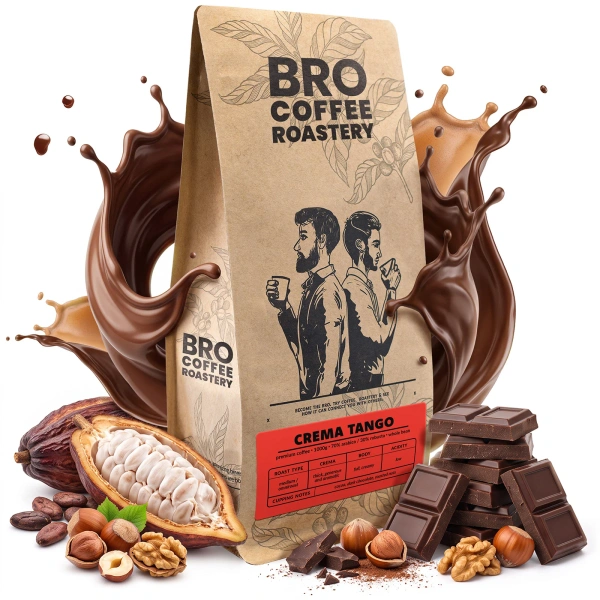
Bro Coffee Roastery – Whole Bean Coffee Crema Tango 1kg
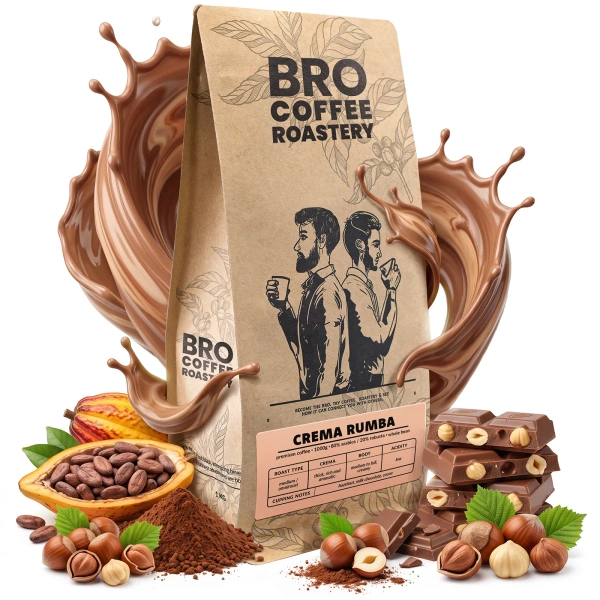
Bro Coffee Roastery – Whole Bean Coffee Crema Rumba 1kg
