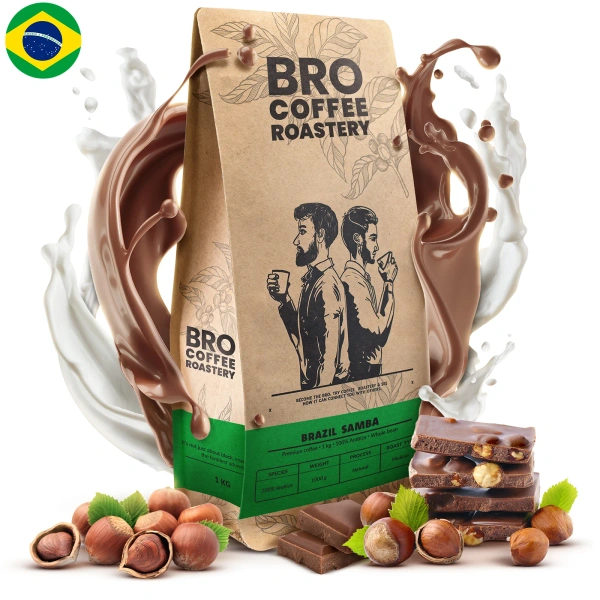
How to store whole bean coffee so it retains its flavour?
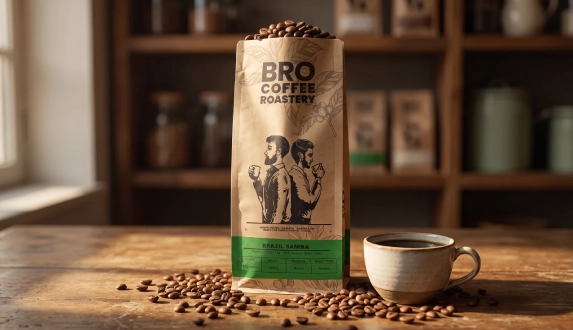
Wondering how to store coffee so that every morning begins with the same wonderfully intense aroma as when you first opened the bag? Many coffee lovers forget that storage conditions have a crucial impact on what ultimately ends up in their cup. Even the finest, carefully selected beans can permanently lose their potential if left without proper protection on the kitchen worktop. The short answer is simple: proper storing coffee means keeping it in an airtight package, in a dry, dark place, away from heat, moisture and strong odours.
Remember that freshly roasted coffee is an exceptionally delicate product that naturally loses some of its most valuable qualities over time. From the moment the beans leave the roaster, a race against time begins, while the oxidation processes taking place inside them accelerate rapidly when they come into contact with unsuitable surroundings.
If you have invested in high-quality speciality coffee, it is worth taking proper care of it, treating it with the same respect as fine wine or fresh, crusty bread. Understanding how coffee deteriorates will help you avoid common mistakes that compromise its flavour. Below, we have gathered the most important principles to help ensure that your daily cup always tastes its best.
Table of contents:
- Why does the way coffee is stored matter?
- How to store whole bean coffee: the most important principles
- How should coffee be stored? Container, jar or original packaging?
- Why is it best to store coffee as whole beans?
- How to store ground coffee?
- How long can freshly roasted coffee be stored?
Why does the way coffee is stored matter?
When you choose beans from the speciality coffee segment, you are investing in a unique and complex sensory profile. However, it is important to remember that coffee is a completely natural product. From the moment the beans leave the roastery, they slowly but inevitably begin to lose their initial freshness. Improper storage of whole bean coffee dramatically accelerates this process, causing the valuable oils responsible for the rich, distinctive flavour of your favourite brew to fade.
What affects coffee freshness?
There are four main enemies that relentlessly damage the quality of coffee beans. Contact with them causes rapid oxidation, leaving the brew flat, characterless and stale. What should you watch out for?
- ❌ Oxygen – the main culprit behind aroma loss. Excessive exposure to air causes the beans to oxidise at an accelerated rate.
- ❌ Moisture – coffee beans behave like a natural sponge. They absorb moisture from their surroundings, which can affect the flavour and, in extreme cases, even lead to mould growth.
- ❌ Light – both direct sunlight and harsh artificial light accelerate the ageing of the beans and degrade their structure.
- ❌ High temperatures – keeping a bag near the hob, oven or on a sunny worktop is a straightforward recipe for disaster. Heat encourages the aromatic oils to migrate towards the surface of the beans, causing them to dissipate more quickly.
💡 Worth knowing: The coffee world has an approximate “Rule of 15”, which illustrates how quickly coffee aroma can fade. It suggests that green coffee loses quality after 15 months, freshly roasted coffee begins to go stale after 15 days if it is not protected from oxygen, and ground coffee loses its finest qualities in as little as 15 minutes. This is not a strict rule or a use-by date, but a practical guideline: whole beans retain their aroma for much longer than ground coffee, while contact with oxygen gradually weakens their sensory profile.
Why does freshly roasted coffee require special protection?
Immediately after roasting, the beans are full of carbon dioxide and natural aromatic oils. During the first few days after leaving the roaster, freshly roasted coffee actively releases gas in a process known as degassing. This is entirely natural and even desirable. However, the same volatile compounds that create wonderful notes of chocolate, ripe fruit and delicate flowers in the cup are highly sensitive to external conditions.
For the speciality coffee supplied by your trusted coffee shop to reveal its full potential in the cup, you need to create a protective barrier around it. Many beginners ask how to store whole bean coffee after opening. The answer always comes down to protecting it from the factors listed above. Leaving an unsealed bag on the kitchen worktop is enough for even outstanding freshly roasted whole bean coffee to lose much of its character within a few days and become a flat, unremarkable drink.
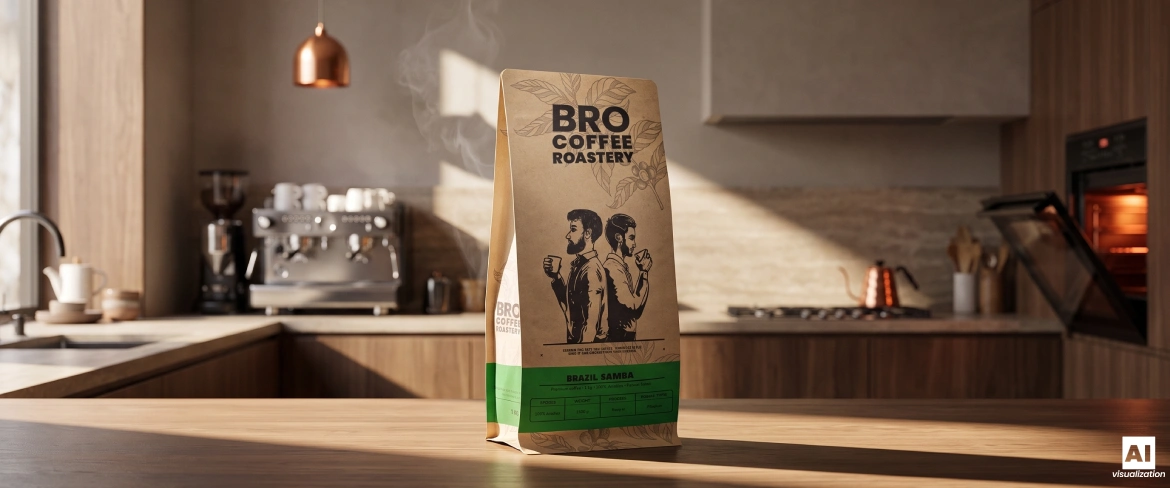
How to store whole bean coffee: the most important principles
Now that we know the biggest enemies of our beans’ freshness, it is time to move on to practical advice. So what are the ideal conditions? The starting point is to create an environment that is airtight, dry, dark and kept at a stable temperature. This is the best way to help your speciality coffee retain its exceptional character for longer.
Keep coffee in an airtight package
Many coffee lovers assume that beans should be transferred to another container as soon as they are purchased. Before you start searching for a decorative coffee jar or a technologically advanced vacuum coffee container, take a closer look at the original bag. Reputable roasteries use specially designed packaging for a reason. It usually features two key elements: a built-in one-way valve and a practical resealable strip, which work together to create an effective barrier.
Let us start with the valve, as its function is particularly important. As you already know, freshly roasted whole bean coffee continues to release carbon dioxide accumulated during roasting in a process known as degassing. If the coffee were sealed in a completely airtight, rigid container without an outlet for these gases, the increasing pressure could even cause the packaging to burst. A one-way valve solves this problem effectively: it allows carbon dioxide to escape safely while blocking oxygen from entering. This mechanism helps protect the beans from oxidation from the moment they are packed.
The second important element is the resealable strip. If you are wondering whether you really need an additional airtight coffee container, it is worth knowing that the original bag with a resealable strip is often more than sufficient. However, it is important to close it properly. Before sealing the strip, gently roll down the top of the bag and press out as much excess air as possible. This simple step significantly reduces the amount of oxygen trapped inside with the beans.
What about popular jars and decorative tins? It is worth remembering that an ordinary coffee container – one without a dedicated air-removal system – is not necessarily the best option for your beans. Transferring coffee into it can leave a large empty space filled with oxygen. Each time the lid is opened, another portion of air enters and begins to affect the valuable aromatic oils. Unless you have professional vacuum equipment, the original roastery bag will generally be the safest home for your coffee.

💡 Worth knowing: Bro Coffee Roastery packaging
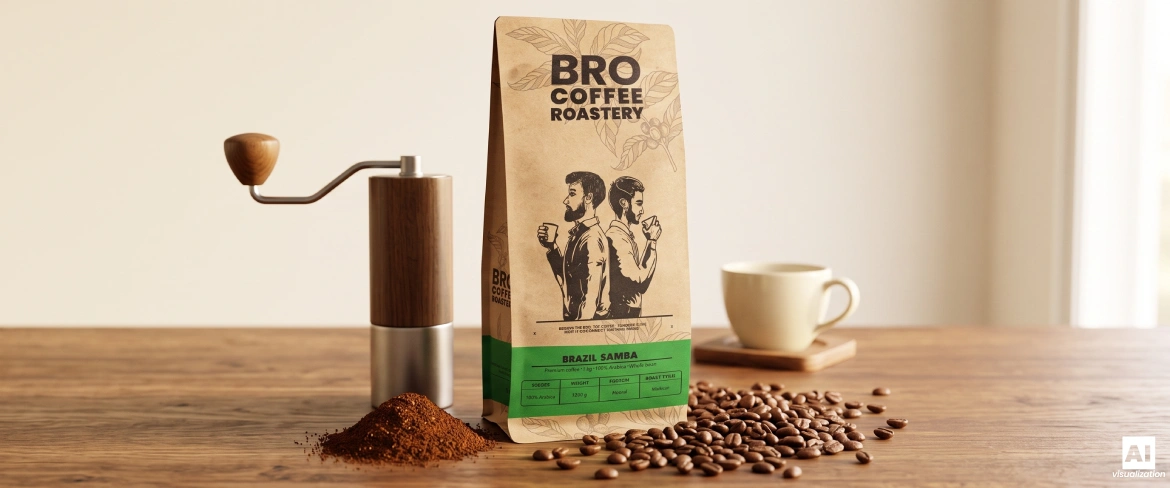
When you choose beans from our roastery, you do not need to invest in expensive additional storage accessories straight away. Every Bro Coffee Roastery bag comes as standard with an integrated degassing valve and a reliable resealable strip (zip-lock), as shown in the graphic. Together, these features help protect your coffee from losing its freshness, from the first brew to the last.
Protect coffee from moisture and odours
Coffee beans have strong hygroscopic properties, which means that they behave like a natural sponge, quickly absorbing moisture and odours from their surroundings. For this reason, keep them away from areas with increased humidity, such as cupboards directly above the sink, dishwasher or a steaming kettle. Moisture not only accelerates staling, but can also affect the structure of the aromatic oils, resulting in a flat and understated flavour in the cup.
The surrounding products on the shelf matter too. Coffee placed next to strongly scented spices, such as curry, cinnamon or garlic, can absorb their aromas and lose its original, often highly complex sensory profile. If you want to enjoy the full benefits of your brew – and we have discussed whether coffee is healthy, how it affects the body and how to choose good coffee in detail in one of our previous articles – you should keep it in an odour-neutral environment.
💡 Did you know? Thanks to its remarkable absorbent properties, coffee is sometimes used as a natural odour neutraliser. Some people deliberately place a bowl of old, stale beans in problem areas, such as the fridge, a shoe cupboard or the interior of a car. This is a good illustration of why an unsealed bag of your favourite fruity Arabica left next to spices may develop rather unexpected notes when brewed.
Do not store coffee in the fridge
Where did the idea of hiding a bag of coffee beans between the dairy products and vegetables come from? It probably stems from a natural habit: most of us instinctively refrigerate products when we want to extend their shelf life. Since low temperatures slow down the deterioration of many foods, it may seem logical to assume that the same applies to coffee. In reality, the opposite is true.
Although this logic works well for many food products, storing coffee in the fridge for everyday brewing is one of the most harmful myths. A refrigerator is a particularly unsuitable environment for beans for two specific reasons:
- ❌ Risk of condensation – consider the physics behind it. Whenever you take a cold bag into a warm kitchen, water can condense on the beans or inside the packaging, just as it does on a bottle taken out of the fridge. Coffee can absorb this moisture through its porous structure, which may damage delicate aromatic oils and lead to uneven extraction and a flat, characterless brew.
- ❌ A mixture of aromas – remember the hygroscopic properties of coffee beans mentioned above? A refrigerator is a closed, humid environment filled with strong aromas from foods such as cured meats, cheese and leftovers. Coffee can absorb these aromas very easily, permanently compromising its sensory profile.
It is worth making an important distinction here. In the speciality coffee world, freezing beans is sometimes used for long-term storage, but this is a different method from keeping coffee in the fridge for everyday use. Freezing can make sense when the beans are divided into single-use portions and sealed as airtight as possible, for example with a heat sealer, to prevent moisture from getting in. A portion that has been thawed should not be frozen again.
For everyday use, the better and safer solution is simply to keep a tightly sealed bag in a dry, dark cupboard.
📌 In summary: The best environment for storing coffee is a tightly sealed, preferably original package kept in a dry, dark cupboard at a stable room temperature. Keep it away from ovens, kettles and spices – and remember that the fridge is best avoided.
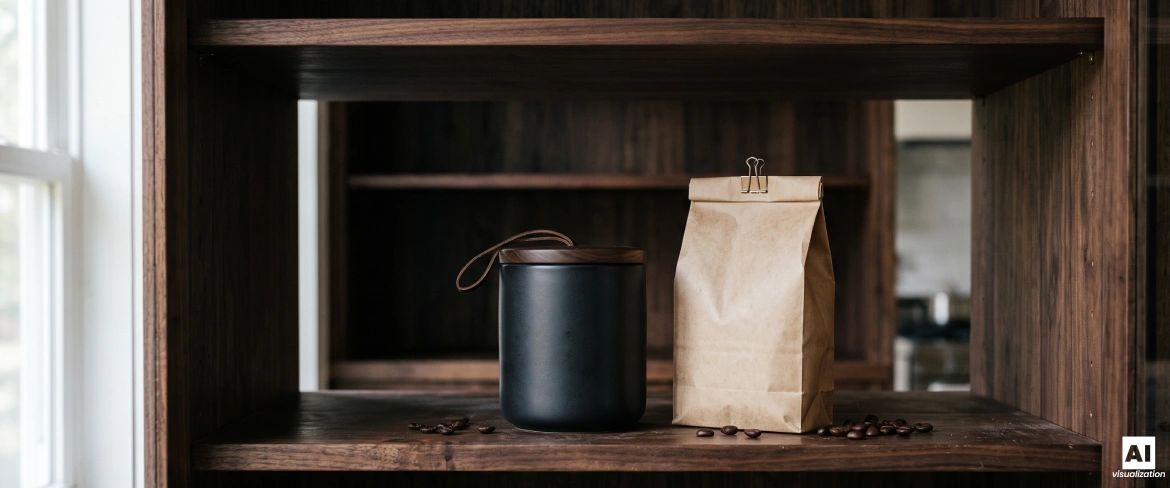
How should coffee be stored? Container, jar or original packaging?
We already know which conditions help coffee beans retain their highest quality. The remaining question is a practical one: what should you store coffee in? Is an elegant tin really necessary, or will the original roastery bag be perfectly adequate? The key considerations are airtightness, protection from sunlight and a material that is neutral in terms of odour.
Which coffee container should you choose?
If the original bag has been damaged or you simply prefer using a dedicated storage solution, it is worth knowing what to look for. A good coffee container should meet several important requirements:
- ✔️ Airtightness: the lid should have a solid silicone or rubber seal. The less air that enters when the container is closed, the better.
- ✔️ Opaque material: the container should fully block light, which can significantly accelerate the ageing of the beans.
- ✔️ Material neutrality: the interior should not react with coffee oils or transfer its own odour. For this reason, avoid low-quality plastic, as natural oils from the beans can seep into it and eventually turn rancid, affecting the flavour of every subsequent batch. High-quality ceramic, stainless steel or specially tinted glass are all good options.
Protecting the coffee itself is always the priority. Even the finest coffee accessories – such as precision grinders, moka pots, drippers or high-quality thermal coffee vessels available in our range – cannot bring out the beans’ full flavour potential if they have already gone stale due to unsuitable storage.
Is a transparent coffee jar suitable for storing coffee?
Many of us love the sight of matching containers arranged neatly on a kitchen worktop, filled with beautiful brown beans. Unfortunately, although this looks appealing and often features in social media photographs, it is far from ideal for the coffee itself.
A classic transparent coffee jar offers no protection against the damaging effects of UV rays or harsh artificial light. Photodegradation can cause the beans to lose their original flavour profile and develop stale, flat characteristics more quickly. Does this mean that glass is completely unsuitable? Not necessarily. If your jar closes fully airtight and has a sturdy seal and clip, you can use it, but only if you keep it permanently out of sight on the worktop and store it in a dark, closed cupboard.
| Type of coffee container | Protection from light | Verdict for freshness |
|---|---|---|
| Transparent glass on the worktop | No protection | ❌ Not recommended |
| Opaque ceramic / steel | Full protection | ✔️ A good choice |
| Transparent glass in a cupboard | Dependent on the conditions | ✔️ Acceptable if the cupboard is enclosed |
Is it worth transferring coffee to another container?
The answer is simple: usually, there is no need to do so. If the roastery bag is undamaged, has a functioning degassing valve and a resealable strip, it already provides an excellent storage environment and there is little reason to change it.
Transferring the beans to another container makes sense mainly in three situations:
- ✔️ The original packaging was damaged during transport or accidentally cut in a way that prevents it from being resealed,
- ✔️ You bought coffee in a simple, unlined paper bag or packaging without any protection against air, such as beans sold by weight at a local roastery,
- ✔️ You have a technologically advanced vacuum coffee container that allows you to remove the air mechanically, for example with an integrated pump in the lid, after each opening.
📌 In summary: A dedicated airtight coffee container is a useful solution when the original bag has been damaged or when you buy beans by weight. In most cases, especially with speciality coffee, keeping the beans in their original valve-equipped packaging is the safest, most affordable and most convenient option.
Why is it best to store coffee as whole beans?
When considering how to store coffee beans, a fundamental question often arises: why insist on buying coffee in this form at all? After all, a ready-ground bag may seem like a convenient way to save time. The answer lies in simple physics and chemistry. A whole coffee bean acts like a natural, remarkably protective capsule, enclosing its most valuable aromas and aromatic oils within its structure. Until that structure is mechanically broken, the loss of freshness progresses relatively slowly, giving us more time to enjoy the coffee’s full flavour.
Whole bean coffee retains its aroma longer than ground coffee
As soon as a grinder breaks a bean into hundreds of tiny particles, the surface area exposed to oxygen increases dramatically. This is when rapid oxidation begins. The aromatic compounds carefully developed by the roaster during the roasting process gradually escape into the air with every passing second.
Buying coffee as whole beans is therefore essential for anyone who wants to get the very best from their brew. If you are interested in consciously shaping a coffee’s sensory profile – a subject we explore in detail in our article Coffee acidity and bitterness – how to choose the perfect beans for your taste – whole beans are the most reliable choice. Even the most careful approach to storing coffee cannot preserve a bag of ground coffee indefinitely, as it loses its freshness much more rapidly.
💡 Did you know? It is estimated that grinding a single coffee bean can increase the surface area exposed to oxygen by as much as several thousand times. This is why grinding coffee and understanding why freshly ground beans change the flavour of a brew is one of the most fascinating topics in the world of speciality coffee.
Grind coffee just before brewing
One of the key principles followed by professional baristas is to grind exactly the amount of coffee needed, immediately before brewing. This not only releases an intense, wonderfully fresh aroma throughout the kitchen, but also gives you greater flexibility when experimenting with your brew.
It is important to remember that different coffee brewing methods require different grind sizes. A classic moka pot needs particles resembling fine sand, while pour-over methods such as a dripper or Chemex work well with a medium grind, similar to coarse sugar. A popular French Press, on the other hand, is best suited to particles roughly the size of coarse salt. With your own grinder, you have much greater control over the extraction process. What might be worth investing in?
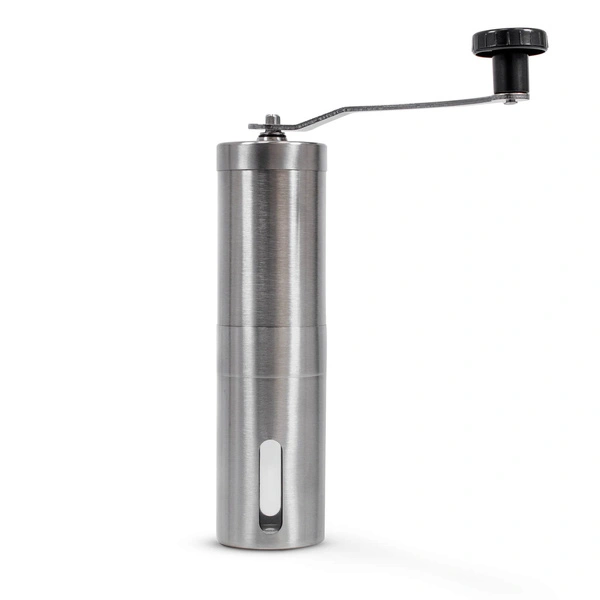
- ✔️ Manual grinder – an excellent choice for getting started. It is usually compact and quiet, and works particularly well for pour-over methods or an AeroPress.
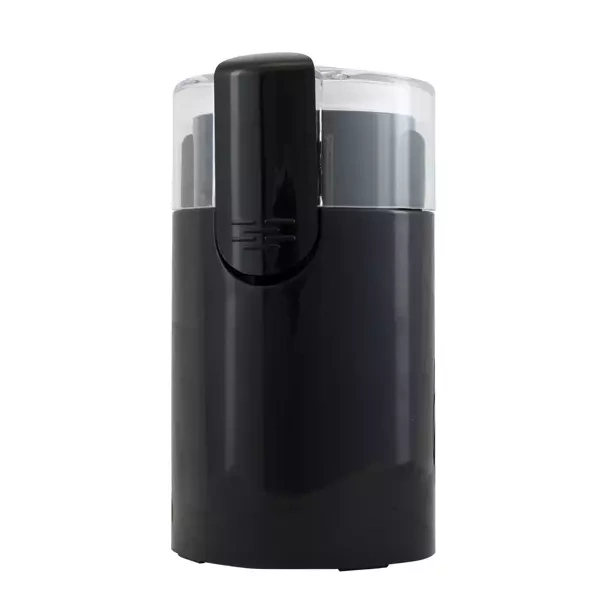
- ✔️ Electric grinder – offering convenience, consistency and speed. It is especially useful if you plan to prepare espresso or simply brew a lot of coffee every day for several people.
📌 In summary: Whole bean coffee acts as a natural protective capsule, helping to preserve its rich flavour and aroma against external factors. To enjoy coffee from the roastery at its best, choose whole beans and grind them at home just a few minutes before adding them to your favourite brewer. It can make a remarkable difference to your daily coffee routine.
How to store ground coffee?
Now that you know why whole beans are the better choice, it is time to address a common reality. Sometimes, because you do not have a grinder, for convenience or simply because you received it as a gift, you may end up with a bag of pre-ground coffee. So, how to store ground coffee and preserve as much of its flavour as possible? Above all, remember that ground coffee requires even more careful protection than whole beans. Once ground, coffee loses much of the natural structure that helps protect its aromas. As a result, it absorbs moisture and surrounding odours quickly, while oxidation progresses at a much faster rate.
To minimise aroma loss and enjoy a decent brew each morning, follow a simple storage plan based on three key principles:
- ✔️ Maximum airtightness: even brief contact with oxygen can affect delicate aromatic oils. If your bag has a resealable strip (zip-lock), close it carefully each time, pressing out as much air as possible first. If the original packaging has been damaged, use an airtight, opaque container with a substantial seal.
- ✔️ Buy smaller quantities: the worst approach is to buy a kilogram of ground coffee “for later”. Because ground coffee has such a large surface area in contact with air, choose an amount you can use within a reasonable time after opening. For one person, this may be 250 g, while a larger household may get through a bigger bag more quickly.
- ✔️ Use it promptly: do not leave an opened bag waiting for special occasions, guests or a quiet weekend. Once opened, ground coffee should be used as soon as reasonably possible. With each passing day, the brew may become flatter until it loses much of its original character.
📌 In summary: Ground coffee is particularly delicate, and its aroma can fade quickly. If you need to store it, buy smaller bags, seal them carefully, keep them in a dark place and use the coffee before opening a new one. Time is its greatest challenge.
How long can freshly roasted coffee be stored?
To bring our coffee journey to a close, there is one more important factor to consider: the passage of time. Even if you now know exactly how to store whole bean coffee and keep it in ideal conditions inside an airtight package, you cannot stop the natural ageing process. In the world of speciality coffee, there is an important difference between the roast date and the best-before date shown on the label.
Food producers are required to state a best-before date, which often ranges from 12 to as much as 24 months. After this date, coffee may still be suitable for brewing, but its aroma and flavour will usually be weaker. If the beans or ground coffee have been exposed to moisture, show signs of mould or have developed an unusual smell, they should not be used. So when does coffee taste its best? Immediately after roasting, the beans need some time to rest and degas. Coffee often reaches its best sensory balance around 7 to 14 days after roasting. During this relatively short window, its flavour notes are at their most expressive and well integrated.
When the storage principles described above are followed carefully, the beans can retain a high level of quality for around 2 to 3 months. After that, the loss of aroma becomes increasingly noticeable: the brew gradually loses its characteristic acidity, sweetness and complexity. By choosing freshly roasted coffee regularly and using it as you go, you can enjoy the qualities carefully developed by the roaster during the roasting process.
Here is a short barista’s guide to the life cycle of coffee after roasting:
- ✔️ 1–6 days: intense degassing. The coffee may still be unstable and taste overly “aggressive”.
- ⭐ 7–14 days: the sweet spot. An excellent balance, full aroma, pronounced sweetness and optimal extraction.
- ✔️ 15 days – 3 months: very good quality, provided the packaging remains airtight. The sensory profile gradually begins to soften.
- ❌ More than 3 months: a noticeable loss of aromas and aromatic oils. The brew becomes flatter and less complex.
Understanding this natural life cycle allows you to approach your morning cup from a more informed perspective. Instead of building up large supplies for several months, a better strategy is to order smaller bags that you can use regularly and enjoy while they are at their best.
Whether you are just beginning to explore pour-over brewing or are a seasoned home espresso enthusiast, the freshness of the coffee is a fundamental part of successful extraction. Remember that even the most expensive grinder and the most advanced espresso machine cannot correct mistakes made while storing coffee on the kitchen shelf.
We hope that, with our tips, opening every bag will mark the beginning of an unforgettable and aromatic coffee experience.
FAQ – Frequently Asked Questions About Storing Coffee
1. Can coffee be stored in the fridge?
Storing coffee in the fridge every day is not recommended. Beans can absorb odours and moisture from their surroundings, and condensation may form inside the packaging when a cold bag is moved into a warmer room. A safer option is to keep the tightly sealed bag in a dry, dark cupboard at a stable room temperature.
2. How should whole bean coffee be stored after opening?
It is best to leave it in its original packaging, provided the bag has a one-way valve and a secure resealable strip. Before closing the bag, press out as much excess air as possible, then store it in a dry, dark cupboard at a stable room temperature.
3. Is it better to keep coffee in its original packaging?
Yes, provided the roastery packaging has the right protective features. The built-in degassing valve allows carbon dioxide released after roasting to escape while limiting the entry of oxygen. Transferring coffee to an ordinary container can trap a large amount of air with the beans, accelerating the loss of freshness.
4. Is whole bean coffee fresher than ground coffee?
Whole beans retain their aroma for longer than ground coffee. The intact bean acts as a natural capsule, helping to protect its aromas and oils from oxidation. Once the beans are ground, their surface area in contact with air increases dramatically, so ground coffee loses its original, complex flavour and aroma much more quickly.
5. How long does freshly roasted coffee retain its best flavour?
Speciality coffee often reaches its best, most balanced sensory profile around 7 to 14 days after roasting. When stored correctly, the beans can retain a very high level of quality for around 2 to 3 months. After that, the flavour notes gradually fade and the brew becomes flatter.
6. What type of container is best for storing coffee?
If you need to transfer the coffee, choose a container that is highly airtight, with a silicone seal, and opaque enough to protect the beans from UV light. The best options are made from materials that are neutral in terms of odour, such as high-quality ceramic, stainless steel or thick, tinted glass. Avoid low-quality plastic containers.
7. Is a transparent glass jar suitable for storing coffee?
Only if it has a fully airtight seal and is stored permanently in a dark cupboard. Keeping a transparent jar on a sunny kitchen worktop exposes the beans to photodegradation. Harsh light breaks down aromatic oils, causing the coffee to lose its flavour more quickly.
Recommended
Hand coffee grinder
Electric coffee grinder 150W
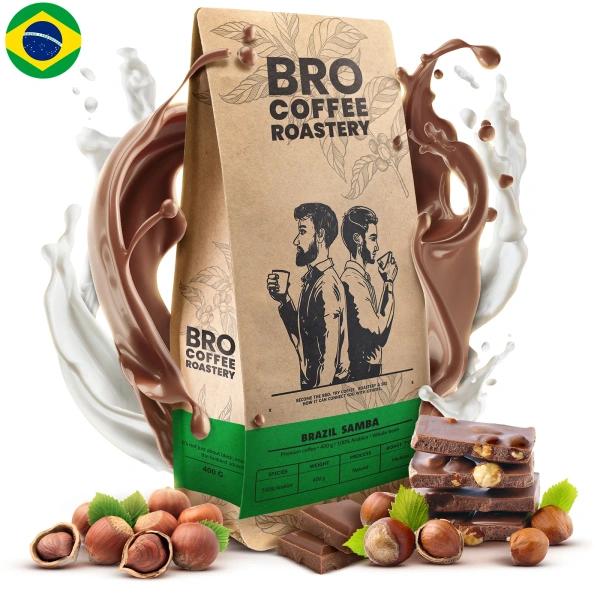
Bro Coffee Roastery – Whole Bean Coffee Brazil Samba Premium 400g