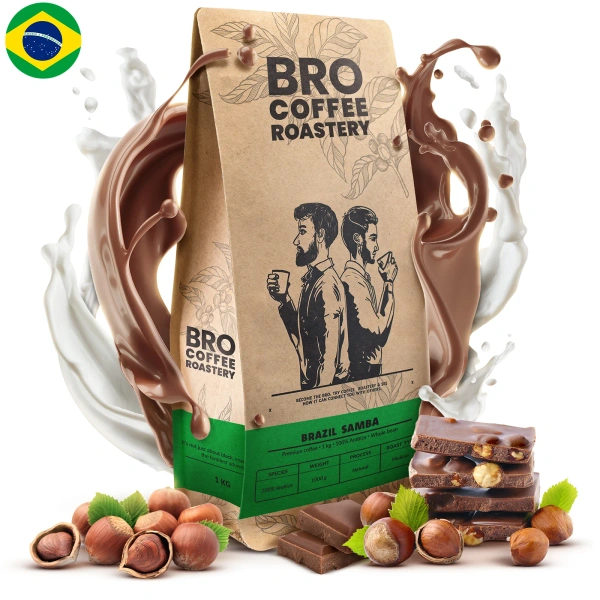
Gingerbread coffee – a homemade gingerbread latte recipe just like your favourite café
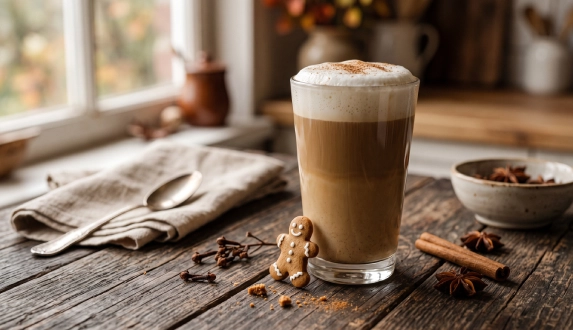
It's getting chillier outside, and the air is starting to fill with the scent of cinnamon and cloves – the perfect moment to treat yourself to a cup of delicious, aromatic and warming gingerbread coffee. This drink is a true autumn-winter ritual, one that can turn a grey, rainy morning into a moment of pure comfort. All it takes is a few minutes and a handful of well-chosen ingredients to bring the atmosphere of a Christmas market straight into your kitchen.
Gingerbread latte is usually associated with the seasonal menus of popular coffee chains, but the truth is that a homemade version can taste even better – without artificial syrups, artificial flavourings or an overly sweet base. What's more, you get full control over the intensity of the spices and the level of sweetness, so you can tailor the drink exactly to your own taste, rather than relying on a ready-made, often overly sugary recipe from a café menu.
The secret lies in combining freshly roasted specialty beans with natural warming spices. If you reach for good-quality whole bean coffee with the right flavour profile, the spiced sweetness becomes nothing more than an accent, rather than a mask hiding the character of the espresso. Importantly, this gingerbread coffee recipe doesn't require any advanced barista equipment or years of experience – all you need is espresso or strong moka pot coffee, a splash of milk and a few spare minutes. In this recipe, we'll show you step by step how to make gingerbread coffee at home that can easily rival the one from your favourite café.
Table of contents:
- What makes the perfect gingerbread coffee?
- Gingerbread coffee – a classic gingerbread latte recipe
- The secret to perfect foam and gingerbread coffee toppings
- Gingerbread coffee, the alternative way: black and syrup-free
What makes the perfect gingerbread coffee?
Good gingerbread coffee is more than just a sweet, spiced dessert in a cup. It's a harmonious drink in which the character of the coffee – its bitterness, aroma and depth – is still clearly noticeable. Unfortunately, the versions served in many popular chains tend to be so oversweetened and loaded with artificial syrups that it's hard to find any trace of espresso in them at all. A craft approach to gingerbread coffee is built on something entirely different: natural spices, quality honey or maple syrup, and freshly roasted coffee that forms the true foundation of the drink, rather than just an afterthought beneath a sweet layer of foam.
Striking a balance between bold espresso and spiced sweetness
The biggest challenge – and the secret – behind a great gingerbread latte is striking the right balance. Warming spices (cinnamon, ginger, cloves, nutmeg) and the sweetness of honey or syrup should only complement the flavour of the espresso, not overpower it. Go overboard with the spices or sweetener, and you'll end up with a "syrupy" drink – one that tastes more like a dessert and loses the coffee's character altogether.
So, before you even start wondering how to make gingerbread coffee while keeping that balance intact, remember one golden rule: the spiced base should be prepared in moderation, and its quantity is easy to adjust to your own taste right from the first brew. It's better to start with a smaller amount of spice and honey and sweeten further if needed, rather than drowning your espresso in syrup from the outset.
💡 Fun fact: Coffee and warming spices don't pair up by accident – they actually share a number of common volatile compounds. Eugenol found in cloves and cinnamaldehyde found in cinnamon naturally bring out the caramel and nutty notes of darker roasted coffee beans. That's why a well-made gingerbread coffee tastes so harmonious – it's no coincidence, but the result of natural flavour pairing (also known as foodpairing).
Which coffee beans should you choose for a gingerbread latte?
The coffee base in a gingerbread latte needs to be intense enough to cut through the milk and warming spices – a coffee that's too delicate or acidic will simply get lost in this rich, aromatic duo. The best choice here is beans with the following profile:
- ✔️ chocolatey and nutty – naturally complements the warming notes of gingerbread,
- ✔️ caramel-forward – adds sweetness without needing to go overboard with honey or syrup,
- ✔️ well-balanced acidity – ensures a smooth, balanced flavour even once milk is added.
Classic espresso blends and single-origin coffees from Brazil or Colombia tick all these boxes perfectly. If you're after a specific recommendation, take a look at our suggestion below.
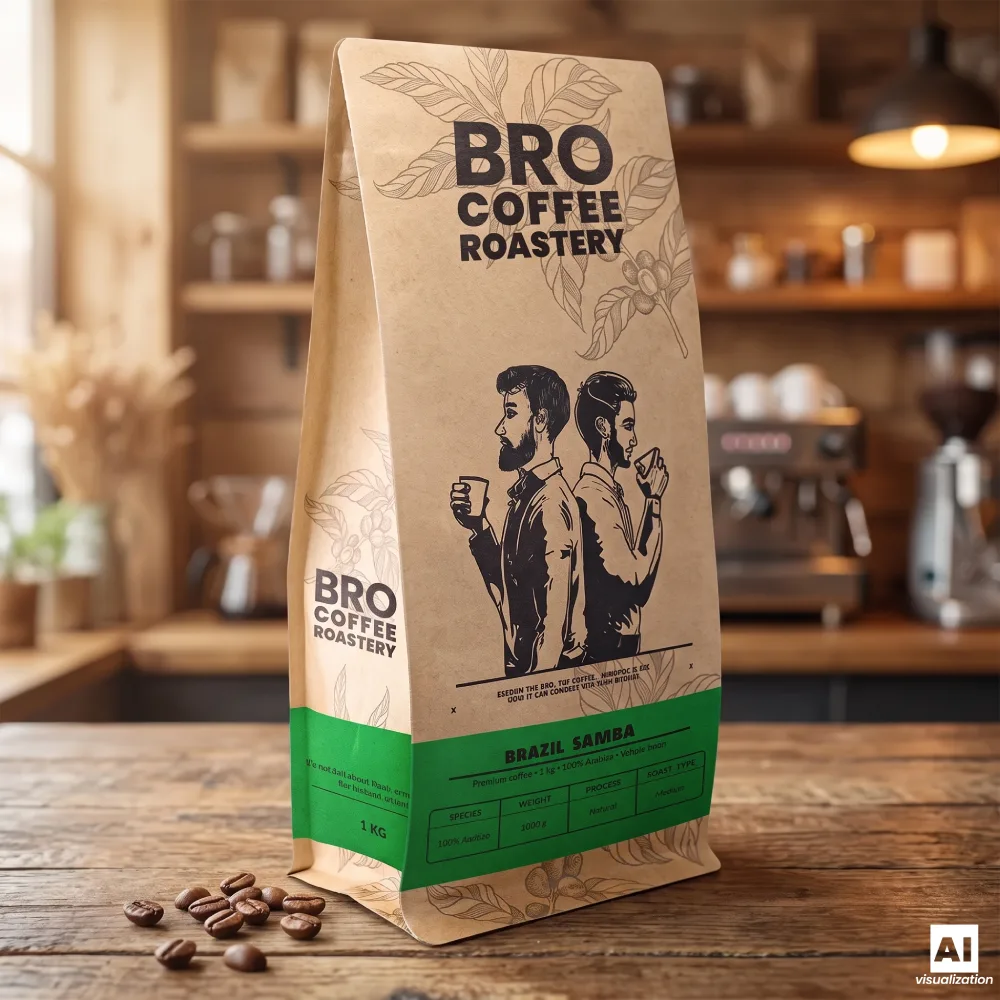
☕ Our recommendation: Bro Coffee Roastery Brazil Samba
For your gingerbread coffee, we recommend Brazil Samba Premium – a classic, 100% arabica from Brazil with a chocolatey, nutty profile, well-balanced medium acidity and a pleasant, medium body. It's a calm, harmonious coffee, scoring 84 points on the SCA scale, which performs beautifully both brewed on its own and combined with milk.
- ✔️ Chocolatey, nutty profile, ideal alongside warming spices.
- ✔️ Balanced acidity – a great base for milk-based coffees.
- ✔️ Works equally well with an espresso machine, moka pot, or alternative brewing methods.
When choosing beans for your gingerbread latte, it's worth opting for coffee that's freshly roasted and full-bodied – it's this choice that will determine whether your gingerbread coffee turns out to be an elegant, well-balanced drink, or just a sweet layer of foam with a hint of caffeine underneath.
Gingerbread coffee – a classic gingerbread latte recipe
Now that you know what makes good gingerbread coffee and which beans work best in it, it's time to get down to business – a tried-and-tested classic gingerbread latte recipe that you can easily make at home. The good news is that you don't need any professional barista equipment to put it together. All you need is an espresso machine, a moka pot or strongly brewed filter coffee, a milk frother (even a simple jar with a lid will do the trick) and a handful of basic spices you've most likely already got in your kitchen cupboard.
Ingredients and ratios for gingerbread coffee
The ratios below have been chosen to strike the perfect harmony between the intensity of the espresso, the creaminess of the milk and the spiced sweetness. This is the base for one serving – if you're making gingerbread coffee for a bigger crowd, simply scale the quantities up proportionally.
| Ingredient | Amount | Tip |
|---|---|---|
| Espresso (double) | approx. 50-60 ml | Can be substituted with strong moka pot coffee |
| Milk | 150-200 ml | Whole cow's milk (3.2%) or oat "barista" milk |
| Honey or maple syrup | 1-2 teaspoons | A natural alternative to shop-bought syrup |
| Gingerbread spice mix | approx. ½-1 teaspoon | No added sugar or flour, or make your own blend of cinnamon, ginger, cloves and nutmeg |
The ratios above are a reliable starting point, but gingerbread coffee is happy to be tweaked. If you prefer a bolder, more warming character, feel free to add half a teaspoon more spice mix – whereas if you're after a milder, milkier profile, simply cut back slightly on the espresso in favour of milk.
Before we move on to actually making the drink, though, it's worth learning one small trick that professional coffee shops use to give their gingerbread coffee that distinctive, deep flavour.
🔍 Worth knowing: That deep, unmistakably gingerbread-like flavour found in many coffee shops comes from a touch of black treacle added to the spiced base. It's this ingredient that gives the drink its earthy, slightly smoky undertone and takes gingerbread coffee to a whole new level of depth. If you've got black treacle to hand, feel free to swap it in for part of the honey – the result might just surprise you!
How to make gingerbread coffee?
The whole process comes down to four simple stages: preparing the spiced base, brewing the espresso, frothing the milk, and elegantly layering everything together in a glass. The key to success lies in the order you do things in – this way, the hot coffee has time to release the essential oils from the spices before the milk goes in.
Below you'll find a detailed step-by-step guide to making gingerbread coffee that looks and tastes just as good as the one from your favourite café.
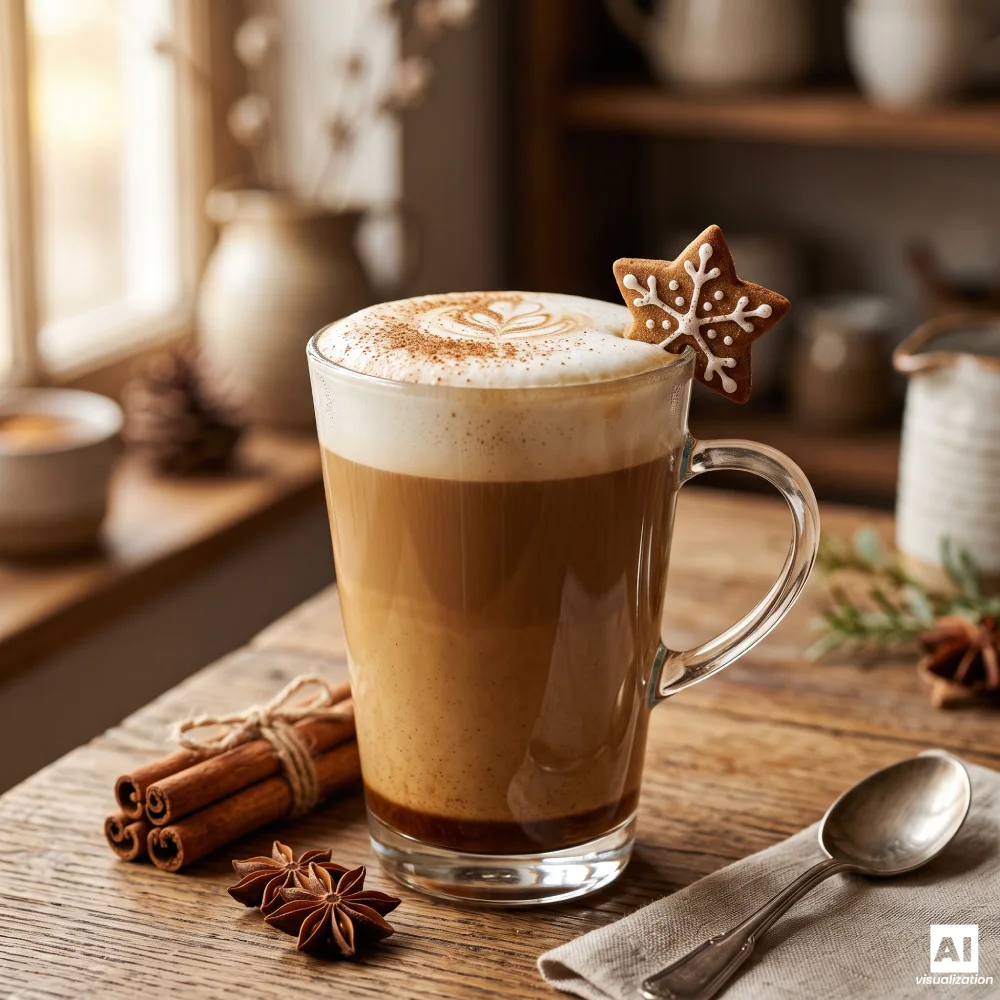
🍪 Gingerbread coffee recipe, step by step
- Prepare the spiced base. At the bottom of a tall mug or glass, mix honey (or maple syrup) with the gingerbread spice mix until you get a smooth, thick paste.
- Brew the espresso straight onto the prepared paste. The hot coffee will release the essential oils from the spices and bring out their full aroma. Stir thoroughly until the base has fully dissolved.
- Heat the milk to around 60-65°C – this is the ideal range for preserving its natural sweetness without scorching it.
- Froth the milk into smooth, velvety microfoam, using a frother, a steam wand, or simply a jar with a lid.
- Gently layer everything together by pouring the frothed milk over the prepared coffee base.
If all's gone to plan, you should be left with a smooth, velvety gingerbread coffee with a clearly noticeable espresso character and a delicate, spiced sweetness in the background – without any of that heavy, oversweetened syrup effect.
This basic version is the foundation you can build on further. In the next part, we'll show you how to draw out the perfect café-style microfoam from your milk, as well as which toppings to use to make your finished drink look just as impressive as it tastes.
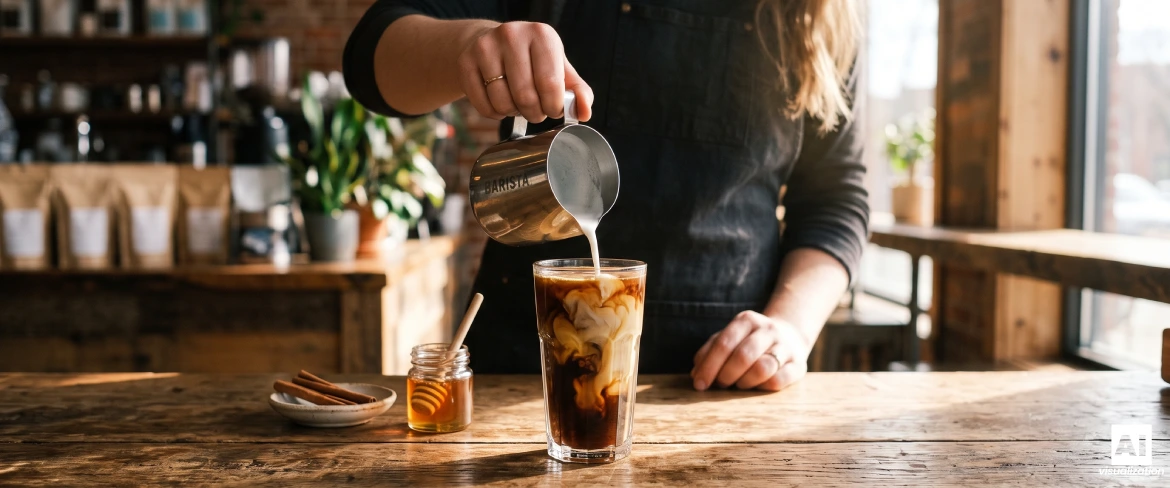
The secret to perfect foam and gingerbread coffee toppings
Even the best-chosen ingredients and perfect ratios won't save the day if you end up with a dry, stiff foam straight out of a supermarket vending machine. The secret to café-quality gingerbread coffee lies in the texture of the milk – or more specifically, in what's known as microfoam, a smooth, glossy, pourable milk foam made up of tiny, almost invisible bubbles. It's this microfoam that gives the drink its velvety consistency, blending seamlessly with the coffee rather than sitting on top as a separate, dry layer.
Good microfoam should:
- ✔️ have a glossy, silky surface – with no large, visible bubbles,
- ✔️ pour freely, rather than sitting stiffly on a spoon,
- ✔️ blend easily into the coffee, creating one smooth, creamy whole.
That said, you don't need a professional espresso machine with a steam wand to achieve this at home. Simply pour warm milk into a lidded jar, leaving a bit of extra room, then shake vigorously for 30-40 seconds until it doubles in volume. A handheld electric milk frother or the plunger from a French press will work just as well – a dozen or so brisk up-and-down movements is all it takes to aerate the milk and achieve that smooth, pourable consistency you'd expect from a café.
Choosing the right milk matters just as much as your frothing technique. Classic whole cow's milk (3.2% fat) produces a thick, stable foam with a noticeably sweet edge – a safe, reliable choice for most home baristas. If you're after an alternative, though, oat "barista" milk is well worth trying – its naturally neutral, slightly biscuity flavour pairs beautifully with the warming spice profile of gingerbread coffee, and it froths brilliantly thanks to the added plant-based fat in its composition.
📌 In short: Cow's milk (3.2%) gives you a thick, creamy foam and a classic flavour, while oat "barista" milk offers a slightly sweet, biscuity character that naturally brings out the warming notes of gingerbread. Both options work brilliantly – the choice mainly comes down to your personal taste and any dietary considerations.
Whipped cream, spices or gingerbread biscuits – how to top off your coffee?
A well-made gingerbread coffee is only half the job – it's the finishing touches that decide whether the drink impresses visually just as much as it does on flavour. Depending on the occasion and your own preferences, you can go for a more indulgent, dessert-style version or a calmer, more elegant presentation.
If you like your gingerbread coffee to feel like a proper festive treat, try topping it with:
- 👉 a generous swirl of whipped cream on top of the drink,
- 👉 a mini gingerbread biscuit perched on the rim of the glass or crumbled over the top,
- 👉 a cinnamon stick as an eye-catching, aromatic finishing touch.
If you'd rather go for a calmer, more refined presentation, all you need to do is:
- 👉 lightly dust the foam with freshly ground cinnamon,
- 👉 or sprinkle over a little grated dark chocolate for a subtly bittersweet contrast.
Whichever version you go for, it's worth keeping one rule in mind: the topping should complement the flavour, not overpower it. A touch of cinnamon or grated chocolate adds character without piling on extra calories, while the full, dessert-style version with whipped cream is perfect for special, festive occasions.
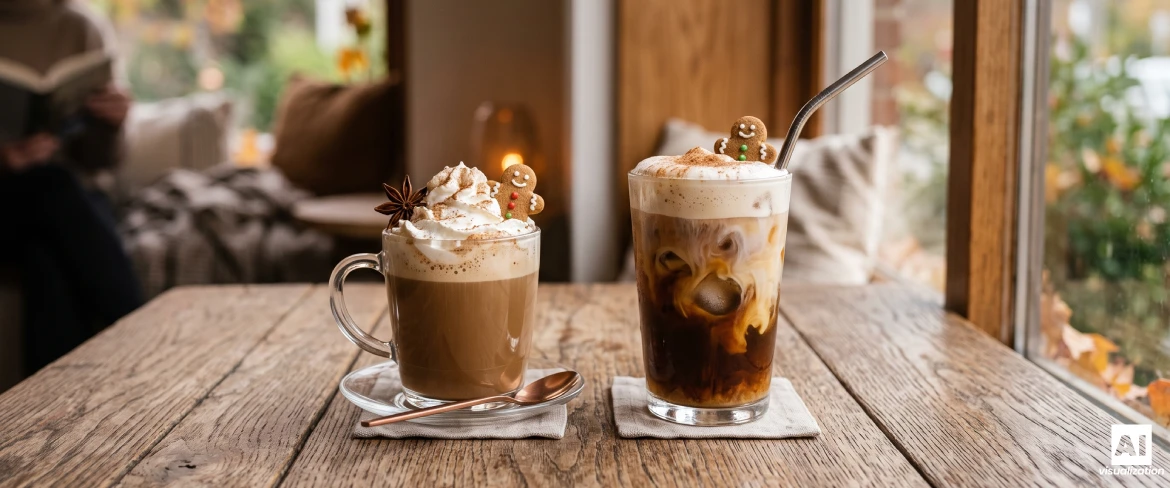
Gingerbread coffee, the alternative way: black and syrup-free
Classic, milky gingerbread coffee isn't the only route to that warming, spiced flavour, though. If you're avoiding dairy, cutting back on sugar, or simply after a lighter, less calorific alternative to a latte, the good news is that warming spices work just as beautifully in clean, black brews – without losing the character we all love about gingerbread coffee.
Spiced Americano or a drip/Chemex pour-over
If you prefer a cleaner, more robust profile, you can add warming spices straight to the ground coffee instead of pairing them with honey or milk. Simply add a few whole spices – say, 2-3 cloves, a piece of cinnamon stick and a slice of fresh ginger – to the filter in your drip or Chemex, your moka pot, or your brewer, then brew the coffee as usual. The hot water will draw out their aroma without adding a single gram of sugar.
This version works brilliantly as:
- ✔️ a spiced Americano – espresso diluted with hot water and infused with spices,
- ✔️ a drip or Chemex pour-over – for a clean, subtly spiced profile,
- ✔️ moka pot coffee – with spices added directly to the ground coffee before brewing.
In this version, the quality of the beans themselves really matters – without milk or syrup, the coffee takes centre stage in the cup. If you're not sure which beans to choose for your favourite brewing method, take a look at our guide to coffee types and flavours – you'll find tips there on matching a bean profile to your preferences.
Quick "shortcut" gingerbread coffee
We don't always have time to prepare syrup, mix up our own spiced base, or measure out precise ratios. Fortunately, there's a version of gingerbread coffee that tastes almost as good, and you can make it in the time it normally takes to brew a simple espresso.
⚡ The 2-minute trick
Stir a teaspoon of honey with a pinch of good-quality gingerbread spice mix directly into your cup of hot espresso before adding the milk. The coffee will release the aroma of the spices almost as effectively as with a longer base preparation, and you'll save yourself a few precious minutes on busy mornings.
This solution works particularly well on hectic days, when time is tight but you don't want to miss out on that spiced, festive feel in your cup. If you fancy experimenting a little further, though, below you'll find a few more variations worth adding to your repertoire.
Gingerbread coffee, more ways to enjoy it – variations to try
Gingerbread coffee is a base you can build on in all sorts of directions – from a refreshing iced version, through a dessert-style pairing with chocolate, right through to a lighter alternative for those watching their waistline. Below you'll find a few ideas worth having up your sleeve.
| Variation | Who's it for? | How to make it? |
|---|---|---|
| Iced gingerbread latte | For chillier, but still autumnal days | Mix espresso with the spiced base, pour over ice cubes and top up with cold, cold-frothed milk |
| Gingerbread mocha | For chocolate lovers | Add a tablespoon of cocoa or melted dark chocolate to the spiced base |
| Gingerbread coffee with a kick | For festive evening gatherings (adults only) | Add 20-30 ml of dark rum, amaretto liqueur or coffee liqueur |
| Light, fitness-friendly version | For those watching their waistline | Use erythritol instead of honey, swap cow's milk for almond milk, and optionally add a teaspoon of ghee |
If you like the sound of an iced, seasonal take on gingerbread coffee, be sure to check out our recipe for Pumpkin Spice Latte – another warming, autumnal latte that works equally well as an alternative to classic gingerbread coffee.
Gingerbread coffee is so much more than a single, rigid recipe. All it takes is well-chosen specialty beans, a few natural warming spices and a bit of practice frothing milk to enjoy its classic, milky version – and from there, it's just a short step to iced, chocolatey, lighter or even evening variations of this drink. Whichever version you go for, the true foundation always remains the same: freshly roasted, good-quality coffee.
Brewing time, the scent of cinnamon and that first sip of velvety gingerbread coffee – the perfect way to start an autumn-winter day. Brew your own version and discover that a homemade gingerbread latte can taste every bit as good as the one from your favourite café.
FAQ – frequently asked questions about gingerbread coffee
1. Can you make gingerbread coffee without a pressurised espresso machine?
Yes, you don't need a professional pressurised espresso machine to make gingerbread coffee. You can prepare the coffee base using a moka pot, a pour-over (such as a drip or Chemex), or even strongly brewed French press coffee. What matters most is that the brew is intense enough to cut through the milk and warming spices, keeping the coffee's character clearly noticeable.
2. Can you add gingerbread spice mix directly to ground coffee?
Yes, this is one of the more interesting alternatives to the classic syrup-based method. Simply add whole or freshly crushed warming spices – such as cloves, a piece of cinnamon stick or a slice of ginger – directly to the filter, moka pot or brewer before adding water to the coffee. This approach works particularly well in black versions, without milk or sugar, giving a clean, spiced character to the brew.
3. Which milk works best in a gingerbread latte?
Cow's milk with 3.2% fat content works best, giving a thick, stable foam with a noticeably sweet edge. If you'd prefer a plant-based alternative, oat "barista" milk is a great choice – its neutral, slightly biscuity flavour naturally brings out the warming notes of gingerbread, and it froths well thanks to its plant-based fat content.
4. How do you make a homemade gingerbread syrup, and how long can it be stored?
To make a homemade gingerbread syrup, simmer honey or cane sugar with a little water and warming spices (cinnamon, ginger, cloves and nutmeg) for a few minutes, until the ingredients combine into a thick, aromatic consistency. Once cooled, pour the syrup into an airtight, sterilised jar and store it in the fridge – it will keep its freshness and aroma for around 1-2 weeks.
5. What can you use instead of sugar or syrup in gingerbread coffee?
If you're after a lighter version of the drink, you can swap sugar or syrup for erythritol or another natural, calorie-free sweetener. A touch of black treacle also works well, giving gingerbread coffee a deep, slightly smoky undertone, as do dates blended with a little hot water – naturally sweet and rich in warming character.
Recommended
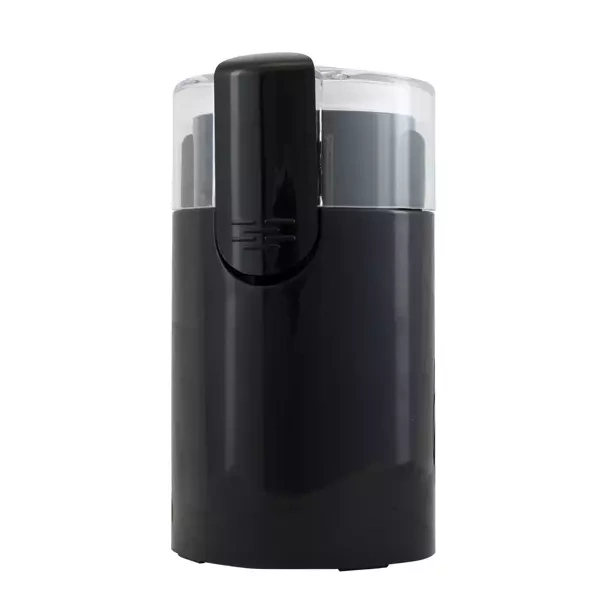
Electric coffee grinder 150W
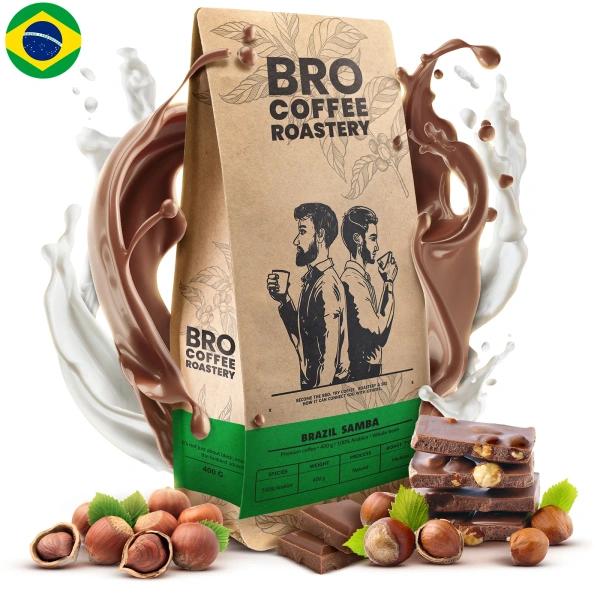
Bro Coffee Roastery – Whole Bean Coffee Brazil Samba Premium 400g